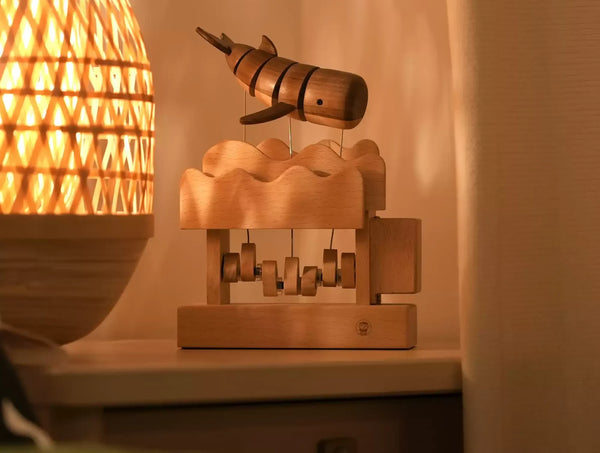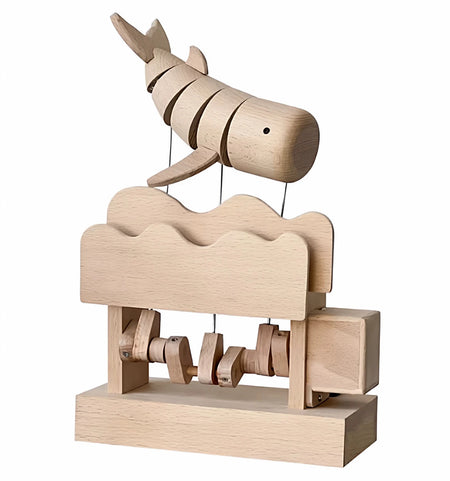
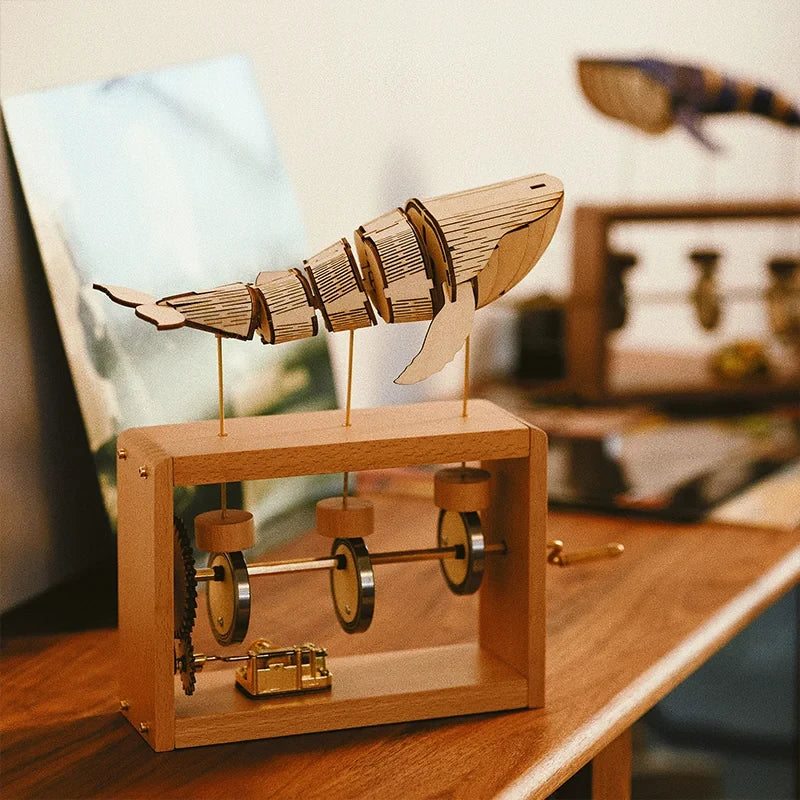
Two looks keep coming up when people shop for a wooden automaton: pale wood and dark wood. They change the feel of a piece on your desk, and in some of our pieces you can choose between them. This guide compares the two looks, using the MoveArtly collection for what we actually sell. We have not confirmed the timber species of each piece, so we describe the wood by its color, as our product pages do.
Why the wood matters on a desk piece
A desk automaton is small, so the wood is the first thing you see. It sets the color of the whole piece, it shows its grain up close, and it decides how the piece sits next to a monitor, a lamp or a shelf of books.
Pale wood: light and bright
Pale wood reads as light and warm, and it shows its grain clearly in daylight. Wood of any color moves with changes in humidity, so it is worth keeping any wooden piece away from damp rooms and heat sources. Our setup and care guide covers that.
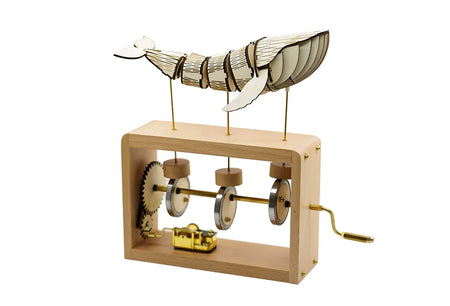
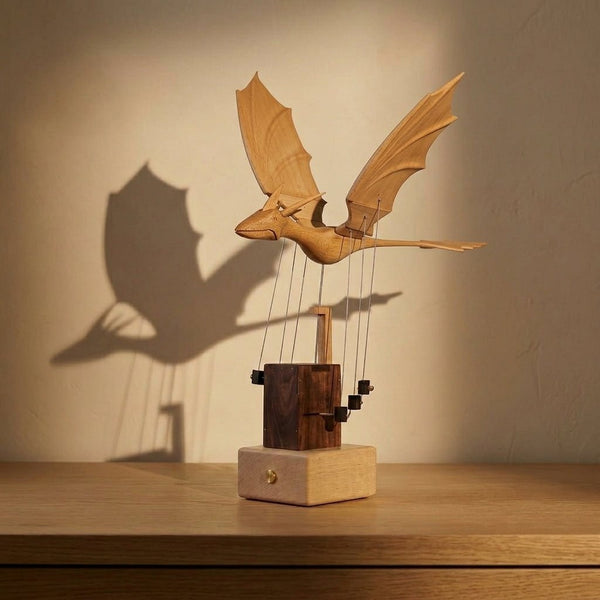
Where you will see pale wood in the collection: the box of Wavecrest is pale wood, and Tidehymn is sold in a pale wood edition at $139, which the page describes as a light frame. The pale wood edition of Wyvernwood is $209.
Dark wood: deep and warm
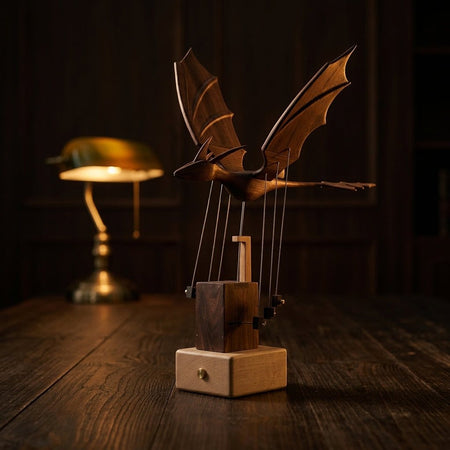
Dark wood gives a deep, warm look and stands out against a pale wall.
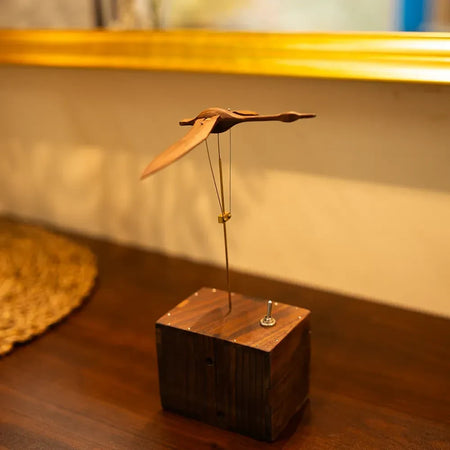
In the collection, the swan of Lakesong has dark wood wings and a dark wood box. The whale of Floatfin is carved from dark wood and floats above a pale wood base in the Levitating edition. Tidehymn comes in a dark wood edition at $169, and Wyvernwood in a dark wood edition at $219. The dark wood editions of those two pieces cost a little more than the pale wood ones ($30 more for Tidehymn, $10 more for Wyvernwood).
Pale and dark side by side
- Pale wood: a light, bright look that shows its grain in daylight.
- Dark wood: a deep, warm look that stands out against pale walls.
Does the wood change how the piece works?
No. On the product pages, Tidehymn says that its pale wood edition has a light frame and its dark wood edition a dark one, and that the mechanism is the same. Wyvernwood says the same of its dark and pale editions. The choice between them is about looks, and about whether the dark wood price difference is worth it to you.
How to choose: light room, dark room, or both
A practical way to choose is to look at the room the piece will live in. Pale wood suits a bright desk by a window and shows its grain clearly in daylight. Dark wood stands out against a pale wall and looks at home next to a warm lamp. Many pieces in the collection sidestep the decision by combining the two. Twin Wake pairs a pale dolphin with a dark one, Longshore has a dark shell over pale flippers, and Tidewing has a dark tower on a light base.
Natural wood also varies from piece to piece, so expect your piece to differ a little from the photos.
The short answer
- Choose pale wood for a light, bright look and the lower price on pieces that come in both.
- Choose dark wood for a deep, warm look, and accept the higher price on those pieces.
- Choose a two-wood piece if you cannot decide: the contrast is part of the design.
- Check the product page: we describe each piece's wood by color, not by timber species.
Whichever you pick, the wood is only half of the piece. The other half is the machinery behind it, which we explain in How Wooden Automata Work.
Keep going
Ready to compare in person? Browse the full MoveArtly collection, read how the mechanisms work in How Wooden Automata Work, or see our gift guide by recipient and budget if you are buying for someone else.